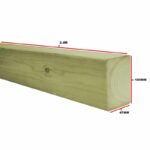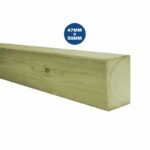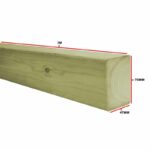
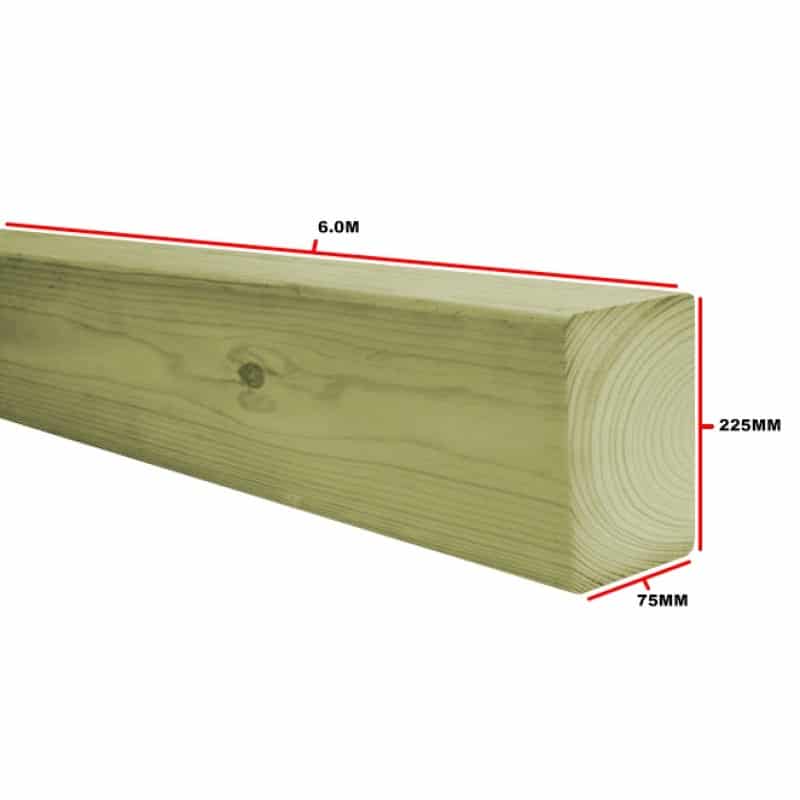
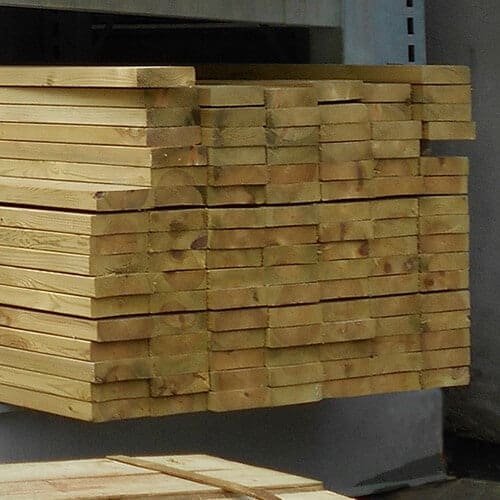

Tanalised Treated Timber 75 x 225mm 6.0m – 9×3 Timber
Tanalised Treated Timber 75 x 225mm 6.0m is a substantial pressure-treated softwood section suitable for demanding outdoor, landscaping and general construction projects. It is commonly known as 9×3 timber, based on its traditional approximate imperial dimensions of 9 inches by 3 inches.
The combination of a deep 225mm section and an extended 6.0-metre length makes this timber suitable for large frameworks and other projects requiring a substantial piece of treated softwood. The longer length may also help reduce the number of joints required across suitable installations.
The timber has undergone a controlled pressure-treatment process to help protect it against fungal decay and wood-destroying insects. This makes it more durable than untreated softwood when correctly specified, installed and maintained in suitable external environments.
Product dimensions
The nominal product dimensions are:
- Metric section: 75mm x 225mm
- Common imperial name: 9×3 timber
- Length: 6.0m
- Material: Treated softwood
- Treatment: Pressure treated or tanalised
- Finish: Sawn timber
- Suitable for: Building, landscaping and outdoor projects
The term 9×3 is a familiar traditional description rather than an exact finished measurement. Use the stated metric dimensions when planning and measuring your project.
What is tanalised treated timber?
Tanalised timber is wood that has been impregnated with preservative through a controlled vacuum and pressure process. The treatment is driven deeper into the timber than a standard surface-applied product, providing protection throughout the treated outer section.
This helps defend the timber against fungal decay and wood-destroying insects. It is therefore a practical choice for outdoor structures, landscaping and exposed building applications.
Pressure treatment does not make the timber completely waterproof or prevent all natural weathering. The wood may still absorb and release moisture, which can result in movement, surface checking, shrinkage and gradual changes in colour.
Any areas exposed by cutting, drilling or notching should be coated with a compatible end-grain wood preservative. This helps protect the untreated internal wood revealed during installation.
Common uses for 9×3 treated timber
The substantial 75 x 225mm section makes this product suitable for a range of demanding applications, subject to the correct structural design, treatment specification and installation method.
Possible uses include:
- Heavy-duty outdoor timber frameworks
- Large garden structures
- Landscaping projects
- Agricultural and equestrian construction
- Substantial timber supports and bearers
- Raised landscape features
- External carpentry and joinery
- Bespoke garden buildings
- General construction projects
- Retaining structures where appropriately designed
- Long load-bearing members where correctly graded
- Repairing substantial external timber structures
Where this timber will perform a load-bearing role, confirm that it has the correct strength grade for the application. Tanalised timber should not automatically be assumed to be structurally graded unless it is specifically marked and sold as a recognised class such as C16 or C24.
Span, loading, support spacing and connection details should be checked by a suitably competent person where structural performance is required.
Advantages of the 6.0m length
The long 6.0-metre format provides flexibility for larger projects and may help minimise joints across extended timber structures. It can also be cut into several shorter components where required, potentially reducing waste when a suitable cutting schedule is planned.
Before ordering, consider access to the property or construction site. Sufficient space will be required to unload, store, turn and position a 6.0m length safely.
The timber’s large dimensions, length and moisture content can make it heavy and awkward to handle. Suitable lifting assistance and safe manual-handling procedures should be used.
Natural timber characteristics
Timber is a natural material, so variations in grain, shade, knots and texture should be expected. Features such as resin pockets, small splits and surface checking may occur and do not automatically indicate that the timber is unsuitable.
The treatment process increases the timber’s moisture content. As the timber dries, some natural shrinkage, twisting, cupping or bowing can occur. Longer lengths may display more visible movement and should be stored with adequate support.
Newly treated timber may initially have a green or brown appearance depending on the preservative system used. The colour will gradually weather when exposed to sunlight and outdoor conditions. Treatment marks and shade variations may also be visible between different lengths.
Important sizing information
Please note: Timber dimensions are nominal and may vary slightly due to the manufacturing process, pressure treatment, moisture content and natural movement of the wood.
The common name 9×3 is an approximate imperial description and does not guarantee exact finished dimensions. If precise measurements are essential, check the timber before installation or contact us to confirm the specification of the stock available.
Allow the timber to acclimatise appropriately before completing work that requires precise joints or close tolerances.
Cutting and installation
Use sharp, suitable woodworking tools when cutting or drilling this timber. Wear gloves, eye protection and appropriate respiratory protection when handling, sawing, sanding or machining treated wood.
Work in a well-ventilated location and avoid breathing timber dust. Sawdust and offcuts should be collected and disposed of responsibly. Treated timber must not be burned in domestic fireplaces, wood-burning appliances or garden bonfires.
Apply a suitable end-grain preservative to all cut ends, drilled holes and notches. Use corrosion-resistant fixings compatible with treated timber, particularly where the installation is external or regularly exposed to moisture.
For structural applications, connections, supports and fixings must be designed for the intended loads and installed according to the approved project specification.
Storage and maintenance
Store the timber flat, raised away from the ground and supported at regular intervals. Correct support is especially important for 6.0m lengths because inadequate storage can increase the risk of bowing or twisting.
For visible outdoor projects, a compatible wood stain, oil or protective finish may be applied once the timber has dried sufficiently. Follow the coating manufacturer’s preparation and moisture-content instructions.
Regular inspections can help identify areas requiring maintenance, particularly around fixings, joints, cut ends and surfaces where water may collect.
Key benefits
- Substantial 75 x 225mm section
- Commonly known as 9×3 timber
- Extended 6.0m length
- Pressure treated against decay and insects
- Suitable for demanding outdoor projects
- Useful for large timber frameworks
- May reduce joints across longer structures
- Suitable for landscaping and general construction
- Can be cut to meet project requirements
- Suitable for trade and DIY applications
Tanalised Treated Timber 75 x 225mm 6.0m – 9×3 Timber provides a substantial timber section for heavy-duty outdoor, landscaping and construction projects. Always confirm its exact dimensions, treatment level and strength grade against the requirements of the intended application before installation.