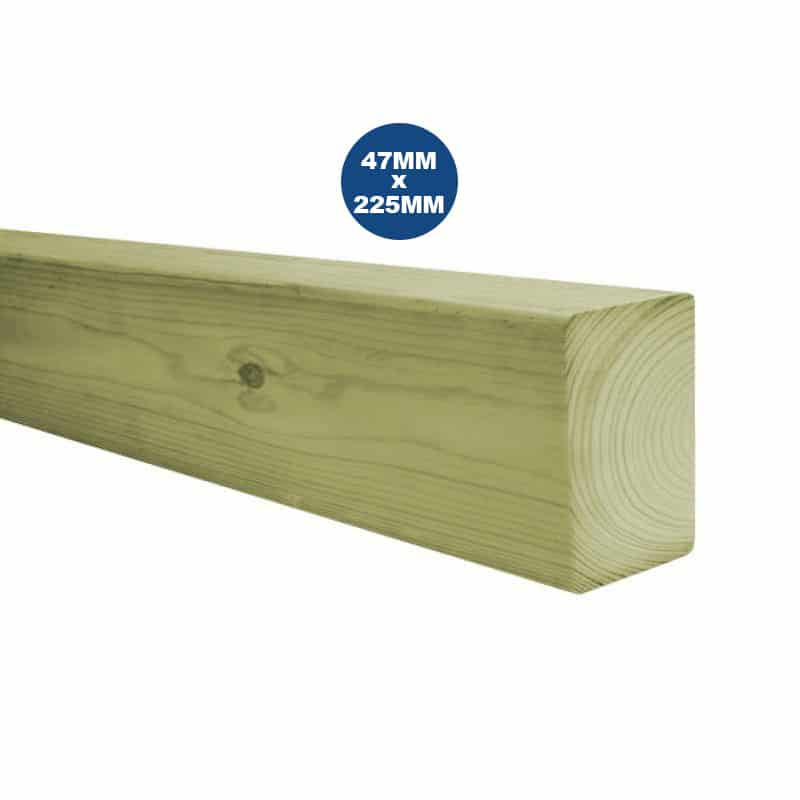

Tanalised Treated Timber 47 x 225mm 3.6m – 9×2
Tanalised Treated Timber 47 x 225mm 3.6m is a substantial timber section intended for demanding building, landscaping and outdoor construction projects. Commonly referred to by builders and tradespeople as 9×2 timber, it offers a generous 225mm nominal width and a practical 3.6-metre length.
This large section is suitable for applications requiring a deeper and more robust piece of timber than standard 4×2, 5×2, 6×2 or 8×2 sections. It can be used for numerous professional and DIY projects, including substantial outdoor frameworks, landscaping structures, raised beds, garden features and general construction work.
The timber has been pressure treated, commonly described as tanalised, to improve its durability. This treatment helps protect the timber against fungal decay and attacks from wood-destroying insects, making it a dependable choice for many exterior and moisture-prone applications.
Product Dimensions
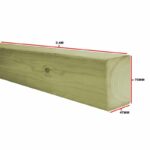
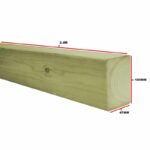
The nominal dimensions of this product are:
- Thickness: 47mm
- Width: 225mm
- Length: 3.6m
- Common imperial name: 9×2
- Finish: Tanalised or pressure treated
The name 9×2 timber is the commonly used imperial trade description for this size. The supplied metric dimensions are approximately 47 x 225mm after processing.
All timber dimensions are nominal rather than guaranteed finished measurements. The actual size can vary slightly because of machining, pressure treatment, moisture content and the natural expansion or contraction of wood. Check each piece before starting any work where exact finished dimensions are important.
What Is Tanalised Timber?
Tanalised timber has undergone a controlled pressure-treatment process. The wood is placed inside a treatment vessel, where preservative is forced into the timber under pressure. This provides more effective protection than a simple surface coating.
The treatment helps defend the timber from fungal decay and wood-destroying insects, potentially extending its service life when it is correctly installed and used in a suitable environment.
Pressure treatment does not make timber completely waterproof, and it does not eliminate the need for appropriate installation and maintenance. Good drainage should be provided, standing water should be avoided, and suitable protection should be applied to newly cut or drilled areas.
Common Uses for 9×2 Treated Timber
The deep 47 x 225mm section makes this timber suitable for a wide variety of substantial projects. Typical applications may include:
- Heavy-duty outdoor frameworks
- Large garden structures
- Pergolas and landscaping features
- Raised beds and substantial planters
- Agricultural and workshop projects
- General outdoor construction
- Timber edging and garden borders
- Repair or replacement projects
- Substantial timber features
- Projects requiring a traditional 9×2 section
The 3.6m length provides useful coverage while being easier to transport, handle and cut than longer 4.8m or 6.0m boards. It may help reduce the number of joints needed in medium-sized projects and can be divided into shorter sections when required.
Suitability will depend on the project design, expected loads, environment and installation method. For structural or load-bearing work, confirm that the timber carries an appropriate strength grade and treatment specification before installation. Pressure-treated timber is not automatically classified as C16, C24 or another structural grade unless it is specifically marked and sold as such.
Benefits of Pressure-Treated Timber
Timber used outdoors may be exposed to rain, moisture, changing temperatures and insects. Pressure treatment improves its resistance to these environmental risks and makes it suitable for many garden and exterior building applications.
Key benefits include:
- Improved resistance to fungal decay
- Protection against wood-destroying insects
- Suitable for numerous outdoor projects
- Longer potential service life than untreated timber
- Substantial 47 x 225mm nominal section
- Practical 3.6-metre length
- Suitable for trade and DIY applications
- Can be cut to meet individual project requirements
Treatment requirements vary according to where and how the timber will be used. Timber intended for an above-ground application may have a different treatment classification from timber designed for permanent ground contact. Always check the required use class when the timber will be placed directly against soil or exposed to continuously wet conditions.
Natural Appearance and Variations
Wood is a natural material, meaning every piece will have a slightly different appearance. Variations in colour, grain pattern and surface texture are normal. Individual boards may feature knots, resin pockets, minor splits, wane, treatment marks or other naturally occurring characteristics.
Freshly treated timber can have a green or pale brown appearance, depending on the treatment and timber species. This colour generally softens and changes as the timber is exposed to daylight and weather.
Changes in moisture content may cause the timber to expand, shrink, twist or develop small surface checks. These are common characteristics of natural wood and do not necessarily affect the timber’s suitability for its intended application.
Please note that colours, sizes and finishes can vary slightly due to the manufacturing and pressure-treatment processes. Product images should therefore be considered representative, as the supplied timber may not look exactly the same as the piece shown.
Cutting and Installation
The timber can be cut using suitable woodworking equipment. Measure carefully and ensure the board is properly supported before cutting to improve accuracy and reduce movement.
Cutting, drilling or notching the timber can expose areas that may not contain the same level of preservative as the original treated surfaces. Apply an appropriate cut-end or end-grain preservative to all exposed areas, following the manufacturer’s instructions.
Use fixings that are compatible with pressure-treated timber and suitable for the installation environment. Galvanised or stainless-steel screws, nails and bolts are commonly chosen for external applications because unsuitable metal fixings may corrode or stain the timber.
Wear gloves, eye protection and an appropriate dust mask when cutting or drilling. Work in a ventilated location, wash your hands after handling the timber and dispose of waste responsibly. Pressure-treated timber should never be burned.
Storage and Maintenance
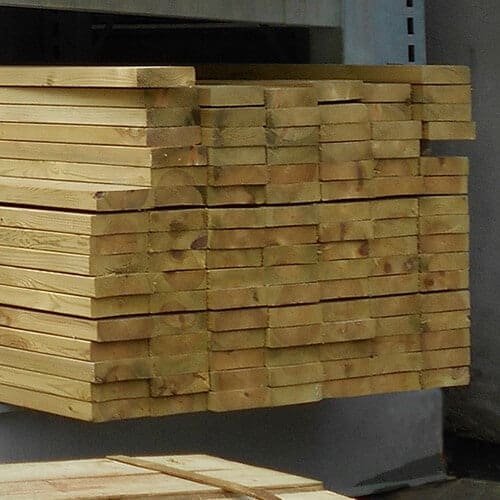
Store the timber flat, evenly supported and raised clear of the ground before installation. Protect it from prolonged exposure to heavy rain while allowing ventilation around each piece. Poor storage can encourage bowing, twisting or uneven moisture changes.
Once installed, the timber may be allowed to weather naturally or finished with a compatible exterior wood stain, paint or oil. Freshly treated or damp timber should be allowed to dry sufficiently before a decorative coating is applied.
Outdoor structures should be inspected periodically for trapped moisture, loose fixings, damaged coatings or newly exposed cut surfaces. Completing minor maintenance promptly can help preserve the timber and the finished project.
Tanalised Treated Timber 47 x 225mm 3.6m provides a large and practical timber section for numerous outdoor building and landscaping tasks. Its pressure-treated finish offers improved durability compared with untreated wood, while its 3.6m length balances useful coverage with manageable handling.
Always check the actual dimensions, condition, strength grade and treatment classification before installation. Seek advice from a suitably qualified professional for structural, retaining or load-bearing projects to ensure that the timber and proposed design are appropriate.