VAT
EX
INC

Cement Blocks for Walls - Concrete Blocks

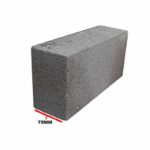
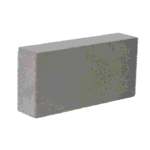
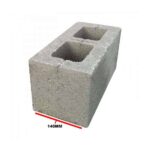
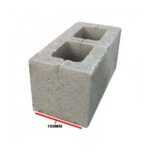
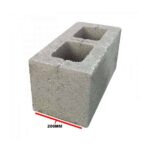
Buy dense, medium density, hollow, thermal and foundation concrete blocks for walls, extensions, garages, garden walls and foundations. Choose from 75mm to 300mm thicknesses in 3.6N and 7.3N strengths, with collection from our Redditch and Coventry branches or delivery to your site. Cement blocks for walls are one of the most widely used construction materials in the UK, valued for their strength, versatility, and cost efficiency. Whether used in residential, commercial, or landscaping projects, cement blocks provide a solid foundation for durable wall construction. At Buildland, we supply a wide range of high-quality cement blocks suitable for load-bearing walls, internal partitions, external walls, and structural applications, ensuring reliability across every build.

Need advice? Our helpful team is here until

What Are Cement Blocks for Walls?

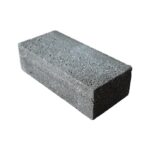
Cement blocks (also known as concrete blocks or CMUs – concrete masonry units) are precast building materials made from cement, aggregates, and water. Once moulded and cured, they form strong rectangular units used to construct walls of all types.

They are commonly used in:

Modern cement blocks are manufactured in different densities and strengths to suit specific construction needs, from lightweight internal blocks to dense structural blocks.

How many concrete blocks do I need?

A standard 440mm x 215mm block, including mortar joints, covers roughly 10 blocks per m² of wall. Measure the wall area, subtract openings such as doors and windows, multiply by 10, then add about 5% for cuts and breakages. Use our materials calculator to work it out for you.

Why buy blocks from Buildland?

FAQs – Cement Blocks for Walls

What is the difference between concrete blocks and cement blocks?

Nothing in practice. “Cement block” is a common name for the same product. Concrete blocks are made from cement, aggregates and water, then moulded and cured.

What is the standard size of a concrete block?

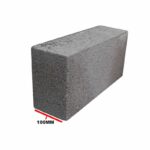
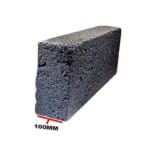
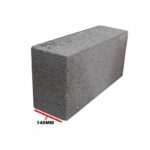
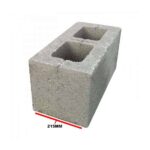
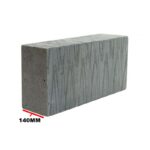
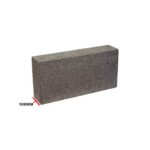
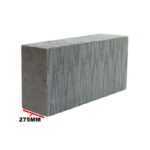
The usual face size is 440mm x 215mm. Thickness varies, with 100mm and 140mm the most common for walls, and 215mm for hollow blocks.

Can concrete blocks be used for external walls?

Yes. Dense 7.3N blocks suit external and load-bearing walls. Blockwork that will be visible or exposed is normally rendered or clad. Check the specification for your project.

Are concrete blocks load-bearing?

Solid dense blocks are designed for load-bearing walls. Lightweight and thermal blocks can also carry load within their strength rating. Always follow the engineer’s or architect’s specification.

What is the difference between 3.6N and 7.3N blocks?

The figure is the block’s compressive strength. 3.6N is typically enough for internal walls and above-ground cavity wall inner leaves. 7.3N is used for foundations, external walls and higher loads.

Are hollow blocks good for walls?

Yes, when used for the right job. Hollow (cellular) blocks are lighter and are often filled with concrete and reinforced for foundations, retaining walls and garden walls. They aren’t normally chosen for their thermal performance. The insulation you need depends on the whole wall build-up and the Building Regulations (Part L), not on the block alone.

Are aircrete (thermal) blocks better than dense blocks?

They do different jobs. Aircrete blocks are lighter, easier to cut and much better at insulating, so they suit the inner leaf of cavity walls. Dense blocks are stronger and more durable, so they suit foundations and below-ground or exposed walls.

Do blocks need insulation?

It depends on the wall design. A cavity wall with thermal blocks and cavity insulation usually meets Part L. A solid dense block wall will normally need added insulation to reach the required U-value. Your designer will specify this.

What mortar do you use with concrete blocks?

A sand and cement mortar mix is typical. The exact ratio depends on the block type, exposure and the project specification.

How long do concrete block walls last?

Properly built and protected from damp, they can last for decades with little maintenance.