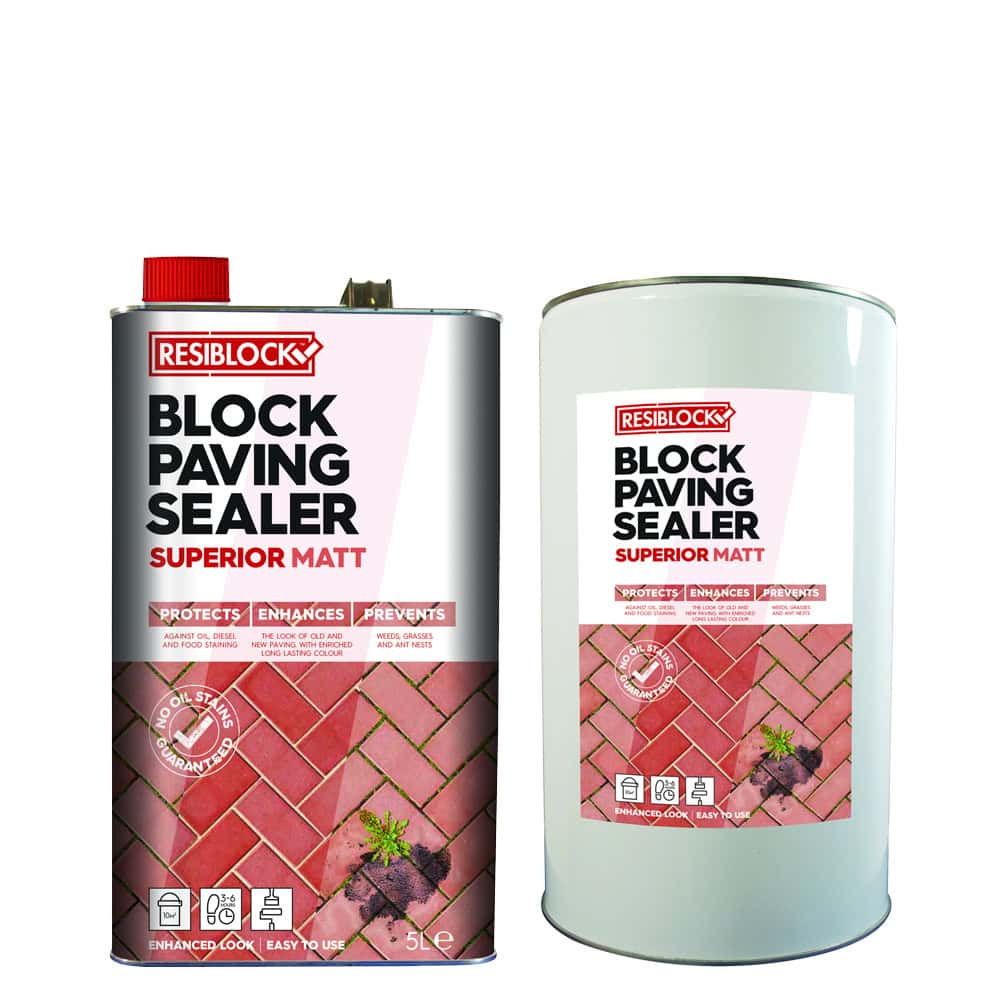

Resiblock Superior Matt Block Paving Sealer
Resiblock Superior Matt Block Paving Sealer is a professional-grade, urethane-based paving sealer and jointing-sand stabiliser for concrete block paving and clay pavers. It protects the paving from water, oil and fuel infiltration while helping bind the jointing sand, inhibit weed growth and maintain the structural integrity of the paved area.
Also known as Resiblock Superior Natural Matt, this low-viscosity treatment penetrates the paving and joints before curing to form a durable, elastomeric protective system. Its natural matt appearance is ideal for homeowners, landscapers and contractors who want effective protection without creating a pronounced glossy or wet-look finish.
Suitable applications include domestic driveways, patios, paved gardens, private roads and small to medium-sized car parks. The product is designed for areas where paving requires dependable stain resistance and long-term joint protection while retaining its normal ability to accommodate limited flexing and movement.
Natural Matt Finish
Resiblock Superior Matt protects block paving while maintaining a more natural appearance than high-gloss alternatives. It may enrich or darken some paving slightly, but it is not intended to create a heavily lacquered finish.
Colour, porosity, age and previous treatments can all influence the final appearance. Always apply the product to a small, inconspicuous test area before treating the entire surface. Allow the test patch to cure completely before deciding whether the finish is acceptable.
Natural variations between blocks may become more noticeable after sealing because individual pavers can absorb different amounts of product. Careful preparation and consistent application help produce the most uniform result.
Stabilises Jointing Sand
One of the principal benefits of Resiblock Superior Matt is its ability to bind and stabilise kiln-dried jointing sand. Unsealed jointing sand can be removed gradually by rainfall, pressure washing, sweeping and regular vehicle movement. As the joints empty, individual blocks may become less stable and more vulnerable to movement or rutting.
The sealer penetrates the joints and binds the sand particles together, helping keep them in place under demanding conditions. Stabilised joints support the paving system and can reduce the need for frequent re-sanding.
Before sealing, every joint must be completely filled with clean, dry kiln-dried sand. However, no surplus sand should remain on the surface or in the chamfers around the top edges of the blocks. Loose sand left in these areas can become sealed onto the paving and spoil the final appearance.
Helps Inhibit Weed and Grass Growth
By stabilising and sealing the jointing sand, Resiblock Superior Matt helps inhibit weeds and grass from establishing within the joints. It also makes the area less favourable for new airborne seeds to take root.
The product will not kill existing weeds or remove established roots. All weeds, moss, algae and other organic growth must be treated and removed before application. Poor drainage and accumulations of soil on the surface may still support future growth, so normal maintenance remains necessary.
Protection Against Water, Oil and Fuel
Resiblock Superior Matt has hydrophobic and oleophobic properties, meaning it helps repel water and oil-based contamination. When correctly applied as the specified system, it protects the block faces and joints against water, oil and hydrocarbon infiltration.
This makes it particularly suitable for driveways and parking areas where leaking engine oil, diesel or petrol could otherwise penetrate the blocks and leave difficult stains. The treatment also offers a high degree of resistance to commercial chemicals and remains unaffected by de-icing salts.
Sealing does not eliminate the need to deal with spills promptly. Oil, fuel and chemicals should be absorbed and cleaned as soon as possible. Always use a cleaning method compatible with the sealed surface.
Suitable Surfaces
Resiblock Superior Matt is suitable for:
- Concrete block paving
- Compatible clay pavers
- Domestic driveways
- Patios and paved gardens
- Private access roads
- Small and medium-sized car parks
- Other compatible block-paved areas
The product is not suitable for pattern-imprinted concrete, engineering bricks, quarry tiles, wet-cast paving flags, hydraulically pressed flags or marble. It should not be applied to natural stone or other unlisted surfaces unless Resiblock has confirmed suitability.
Preparing Existing Block Paving
The paving must be sound, thoroughly clean and completely dry before sealing. Remove dirt, dust, tyre marks, oil, moss, algae, weeds and all other contamination. Failed or sunken areas should be lifted and repaired before the treatment is applied.
Pressure washing may be used where appropriate, but the blocks and joints must then be allowed to dry thoroughly. Trapped moisture can react with the sealer and affect its appearance or performance.
When the area is clean and dry, refill the joints with kiln-dried sand. Compact or sweep the sand into the joints until they are correctly filled. Carefully remove all surplus material from the block faces and chamfers before beginning the application.
Oil and fuel stains must be removed using a suitable cleaner such as Resiblock Oil Remover. General uncured sealer residue and application tools require Resiblock ResiClean. Follow the instructions for each preparation and cleaning product.
Preparing Newly Installed Paving
New block paving must be properly installed, compacted and jointed before sealing. The paving and jointing sand must be completely dry. Surface contamination, cement residue and installation marks should be removed without damaging the blocks.
Do not use the sealer to compensate for poor installation, inadequate edge restraints, insufficient compaction or drainage problems. The completed paving system must be structurally sound before treatment.
Weather and Application Conditions
Apply Resiblock Superior Matt only when there is no risk of rain during the following 24 hours. The surface and jointing sand must be thoroughly dry. Do not apply in extreme temperatures below 3°C or above 30°C.
Check the complete weather forecast before starting. Rain, frost, heavy dew or condensation during curing can affect the finish. The product cures through contact with atmospheric and residual moisture, but this does not mean it should be applied to wet paving.
The area must be well ventilated. As this is a flammable solvent-based product, keep it away from smoking, flames, sparks, heaters and other ignition sources.
How to Apply Resiblock Superior Matt
Apply the product liberally and evenly using a suitable Resiblock ResiRoller. Work methodically in manageable sections and ensure consistent coverage across the blocks and joints.
Concrete block paving requires a two-coat system. Allow a minimum of three hours and a maximum of 24 hours between the first and second coats. The second application completes the system and provides the intended protection against fuel and water infiltration.
Apply one coat only to clay pavers. Applying an additional coat to clay may result in excessive build-up or an unacceptable finish. Always test clay pavers first because their absorbency and appearance vary.
Avoid puddles, runs and heavy accumulations. Work from the furthest point towards the exit so there is no need to cross freshly sealed paving. Do not return unused material to its original container.
Coverage
For concrete block paving, allow approximately 3m² per litre for the first coat and approximately 6m² per litre for the second coat. Actual consumption depends on the porosity, texture, age and joint width of the paving.
When both coats are included, one litre completes approximately 2m² of concrete block paving. As a general guide, a 5-litre container completes approximately 10m², while a 25-litre container completes approximately 50m². These figures should be treated as estimates, and a site trial is recommended.
Clay pavers require one coat only. Highly absorbent, weathered or wide-jointed paving may use more material than expected. Make sure enough product is available to complete the entire application without interruption.
Drying and Reuse Times
Typical drying time is approximately two hours at 20°C. Avoid walking on the sealed paving for at least three hours after application. Keep vehicles off the area for 24 hours.
The completed two-coat system can normally return to full use within approximately 24 hours. Cooler temperatures, limited airflow and higher humidity may extend curing times. Do not reopen the surface until it is fully dry and firm.
Key Features and Benefits
- Professional urethane-based paving sealer
- Natural matt appearance
- Suitable for concrete block paving and clay pavers
- Binds and stabilises jointing sand
- Helps maintain paving stability
- Reduces jointing-sand erosion
- Inhibits weed and grass growth in joints
- Hydrophobic and oleophobic protection
- Helps resist water, oil and fuel infiltration
- Resistant to de-icing salts
- High resistance to many commercial chemicals
- Elastomeric formulation accommodates limited movement
- Two coats for concrete block paving
- One coat only for clay pavers
- Area can return to full use after approximately 24 hours
- Performance life of up to five years
Storage and Safety
Resiblock Superior Matt is flammable. No smoking, naked flames or other ignition sources are permitted during storage or application. Ensure good ventilation and wear protective gloves, clothing and eye or face protection. An appropriate mask is required when working close to the surface or in confined areas.
Clean uncured product from tools immediately using Resiblock ResiClean. Do not use solvents to clean skin. Store unopened containers under cover and protect them from extreme temperatures. Shelf life is approximately 18 months in an unopened container.
Do not reseal or store a partly used container, and never return unused material to the original packaging. Gas pressure and solidification may occur in partially used containers. Always follow the latest Resiblock technical and safety data before application.