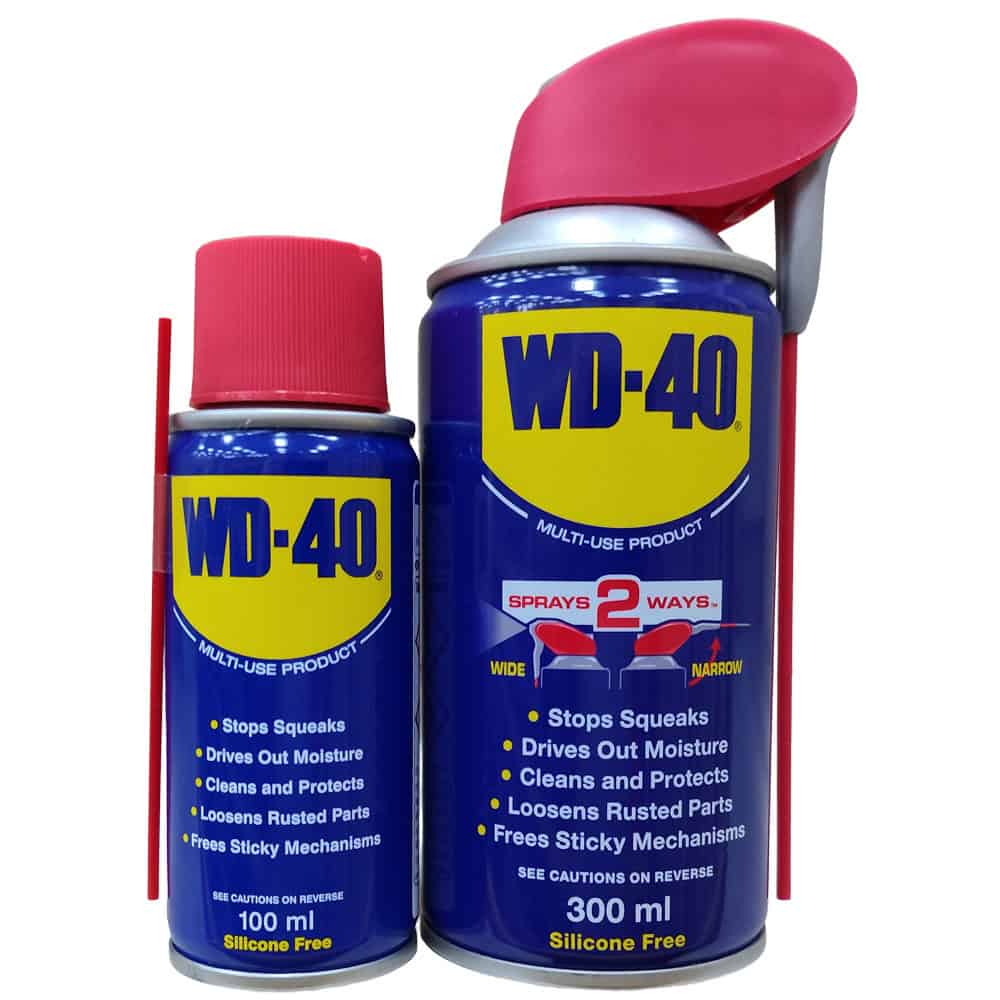

WD-40 Multi-Purpose Penetrant Spray
WD-40 Multi-Purpose Penetrant Spray is a versatile maintenance product designed to solve a wide variety of everyday problems around the home, workshop, garage and building site. Its recognisable multi-purpose formula penetrates seized components, lubricates moving parts, displaces moisture, protects metal against corrosion and helps remove grease, grime and sticky deposits.
Suitable for professional tradespeople, maintenance teams and DIY users, WD-40 can be kept close at hand for freeing rusted fixings, quietening squeaking mechanisms and maintaining tools or equipment. The convenient aerosol application allows the formula to reach joints, threads and moving components that may be difficult to treat with conventional liquid lubricants.
Penetrates stuck and seized parts
WD-40 penetrates between closely fitted metal surfaces, helping to loosen the bond created by rust, dirt and corrosion. It is particularly useful when working with seized nuts, bolts, screws, hinges, catches and other metal components that have become difficult to move or remove.
Apply the product directly to the affected area and allow sufficient time for it to penetrate before attempting to move the component. Heavily corroded parts may require a second application or additional soaking time. Suitable hand tools should always be used, and excessive force should be avoided where it could damage the fixing or surrounding material.
Lubricates moving mechanisms
The lubricating ingredients in WD-40 spread across moving parts to reduce friction and help restore smoother operation. Typical applications include hinges, latches, catches, locks, hand tools, rollers, linkages and other light-duty mechanisms. It can help stop irritating squeaks and make stiff components easier to operate.
WD-40 Multi-Purpose Penetrant Spray is particularly valuable for general maintenance and freeing components. However, it may not replace a specialist long-lasting grease, chain lubricant or high-load lubricant where equipment manufacturers specify one. Always check the instructions for the item being treated and choose a dedicated product for demanding or safety-critical machinery.
Displaces moisture
The WD in WD-40 refers to “water displacement”, one of the product’s best-known functions. The formula helps drive moisture away from metal surfaces and components, making it useful for drying and protecting tools, equipment and mechanisms exposed to damp conditions.
When treating electrical equipment, disconnect it completely from the power supply before application. Allow the product and its vapours to disperse fully before reconnecting the equipment. WD-40 is an extremely flammable aerosol and must never be sprayed onto energised components, hot surfaces, flames, sparks or other ignition sources.
Protects against rust and corrosion
WD-40 leaves a protective coating on treated metal surfaces, helping shield them against moisture and corrosive conditions. Regular application can help maintain hand tools, garden tools, fixings, hinges and other metal components, particularly during storage or after exposure to damp environments.
Before storing a metal tool, clean away heavy dirt and allow the surface to dry. Apply a light, even coating and wipe away excess product with a clean cloth. The protective film is not a replacement for paint, galvanising or another permanent corrosion-control system, but it provides useful short-term protection during routine maintenance and storage.
Cleans grease, grime and residue
In addition to penetrating and lubricating, WD-40 can help loosen grease, grime, tar and sticky residue from many durable surfaces. It may be used to assist with removing labels, adhesive deposits or stubborn marks, provided the receiving material is compatible with the formula.
After allowing the spray time to work, wipe the treated area with a clean cloth. Repeat the process if required and clean the surface afterwards when necessary. Test the product in an inconspicuous place before applying it to paint, plastic, rubber, fabric, finished timber or another sensitive surface, as appearance and compatibility can vary.
Useful around the home and workshop
The product can be used across many maintenance tasks, from freeing a rusted fixing to quietening a squeaking hinge. It is suitable for use on compatible tools, garden equipment, door hardware, garage components, mechanical parts and metal fittings. Keeping a can in the workshop or maintenance cupboard means a reliable penetrating and lubricating spray is available when a component sticks, squeaks or becomes exposed to moisture.
Automotive users may find it helpful for freeing suitable corroded fasteners and maintaining non-critical metal mechanisms. It should not be applied to braking surfaces, tyres, drive belts, pedals, steering grips or any component where a slippery film could create a hazard. Vehicle and equipment manufacturers’ maintenance instructions must take priority.
How to apply WD-40
Shake the aerosol before use and ensure the work area is adequately ventilated. Remove loose dirt from the component and position the can upright. Direct the spray towards the required area and apply only enough product to coat or penetrate the surface.
For seized parts, spray the joint or thread and allow the formula time to penetrate. For lubrication, operate the mechanism gently after application to distribute the product. When protecting a larger metal surface, apply an even coating before wiping away unnecessary excess with a suitable cloth.
If your chosen can includes a precision straw or Smart Straw applicator, use the narrow spray setting for small fixings, threads and difficult-to-reach components. The wider spray setting is more suitable for covering broader surfaces. Application features can vary according to the specific can format supplied.
Compatibility and limitations
Although WD-40 Multi-Purpose Penetrant Spray has an extensive range of uses, it is not suitable for every surface or application. Avoid spraying it onto polycarbonate or clear polystyrene plastics. Care should also be taken with painted finishes, rubber, seals, soft plastics, fabrics and other materials that may be affected by petroleum-based products.
Do not use it as a permanent lubricant where a specialist grease or oil is required. It should not be applied to food-contact surfaces unless the area will be thoroughly cleaned afterwards using an appropriate method. Never use the product on or near open flames, hot equipment or operating electrical systems.
Safe handling and storage
WD-40 aerosol containers are pressurised and extremely flammable. Keep the can away from heat, hot surfaces, sparks, flames and all other ignition sources. Do not smoke during application, and do not pierce or burn the container, even after it is empty.
Use the spray only in a well-ventilated location and avoid breathing the vapour or mist. Prevent prolonged skin contact and keep the product away from the eyes. Store it securely in a cool, suitable place away from direct sunlight and out of the reach of children. Always read and follow the safety information printed on the can.
Why choose WD-40 Multi-Purpose Penetrant Spray?
WD-40 Multi-Purpose Penetrant Spray brings several useful maintenance functions together in one easy-to-use aerosol. It penetrates rusted assemblies, lubricates light-duty moving parts, displaces unwanted moisture, protects metal surfaces and helps clean stubborn residue. This versatility makes it a valuable product for tradespeople, mechanics, maintenance teams and homeowners.
- Penetrates rusted and seized components
- Helps loosen nuts, bolts and fixings
- Lubricates hinges, catches and moving parts
- Stops many common squeaks
- Displaces moisture from metal components
- Helps prevent rust and corrosion
- Loosens grease, grime and sticky deposits
- Suitable for numerous maintenance tasks
- Convenient aerosol application
Always follow the instructions and warnings printed on the supplied container. Test sensitive surfaces before treatment and use a specialist product whenever an application requires permanent lubrication, structural protection or approval from the equipment manufacturer.