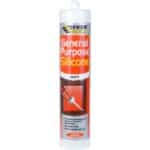
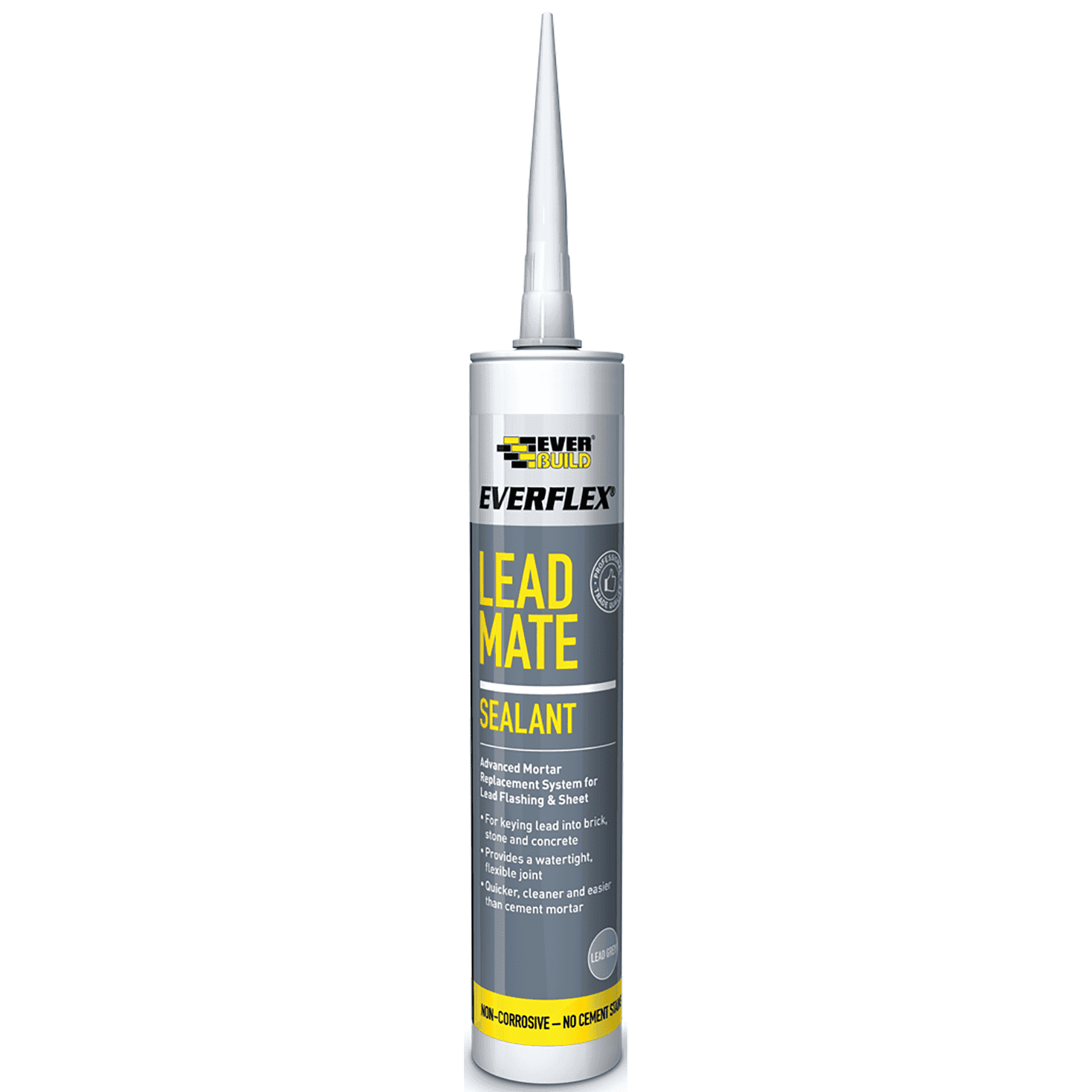

Everflex Lead Mate Sealant 295ml

£3.98 ex. VAT

SKU: LEAD Categories: , Brand:

Everflex Lead Mate Sealant 295ml is a low-modulus, neutral-cure silicone developed for sealing lead flashing and other soft metals. It provides a flexible, weatherproof alternative to mortaring lead into brick, stone and concrete.

Rated good on Google

Rated 4.2 on Google by 390 customers

Everflex Lead Mate Sealant 295ml

Everflex Lead Mate Sealant 295ml is a specialist, low-modulus neutral-cure silicone developed for sealing lead flashing, sheet lead and other soft metals. It provides a flexible, weather-resistant alternative to traditional mortar when pointing lead into brick, stone or concrete.

Unlike acidic silicone formulations, Lead Mate cures without corroding or staining sensitive soft metals. It provides excellent adhesion to lead, zinc, copper and brass while maintaining the flexibility needed to accommodate expansion and contraction caused by changing temperatures.

The lead-grey colour complements traditional roofing materials and creates a professional finish around flashing, roof joints and parapets. Supplied in a standard 295ml cartridge, the sealant can be applied using a conventional sealant gun.

A Flexible Alternative to Mortar

Traditional mortar used around lead flashing can crack as the metal expands and contracts. Lead naturally moves in response to temperature changes, while rigid mortar has limited ability to follow that movement. Over time, this difference can create cracks and openings through which water may enter.

Everflex Lead Mate remains permanently flexible after curing and can accommodate movement of up to approximately ±25%. This allows the seal to move with the lead and surrounding building materials, helping maintain a weatherproof joint through seasonal temperature changes.

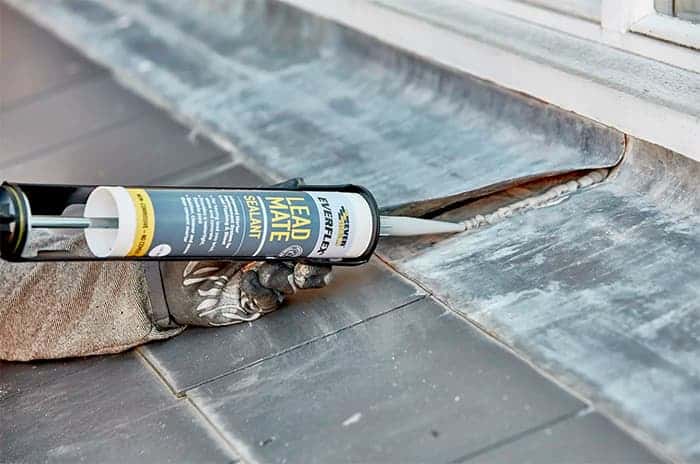
The product is particularly useful where lead flashing is chased into a brick, block, stone or concrete wall. The lead should first be securely fixed using appropriate clips, wedges or mechanical fixings before the joint is sealed with Lead Mate.

Designed for Soft Metals

Lead Mate’s neutral-cure formulation is suitable for use with soft metals that could be affected by acidic sealants. Compatible materials include:

  • Lead
  • Zinc
  • Copper
  • Brass
  • Suitable painted and coated surfaces
  • Brick
  • Stone
  • Concrete
  • Preformed construction panels

The sealant will not stain cement-based or stone surfaces when correctly used. However, natural materials and surface finishes can vary, so completing an adhesion and compatibility test before full application is recommended.

Typical Applications

Everflex Lead Mate Sealant is suitable for a range of roofing, façade and exterior sealing applications, including:

  • Pointing lead flashing into brickwork
  • Sealing sheet lead into stone or concrete
  • Weatherproofing roof and parapet joints
  • Sealing around lead valleys and roof details
  • Joining lead to suitable masonry surfaces
  • Sealing zinc, copper and brass components
  • Expansion joints involving compatible materials
  • Sealing joints around preformed panels
  • External joints exposed to temperature changes
  • General soft-metal sealing and repair work

The product can be used for internal or external applications, although its specialist formulation is particularly valuable for exposed roofing and façade joints where movement and weather resistance are important.

Excellent Weather and Temperature Resistance

Once fully cured, Lead Mate provides excellent resistance to external weathering. It remains flexible through exposure to rain, frost, sunlight and normal seasonal temperature changes.

The cured sealant has a stated service-temperature range of approximately -50°C to +150°C. This broad range makes it suitable for metal roofing details that may become very cold during winter and significantly warmer when exposed to direct sunlight.

The sealant also has low dirt pickup and less than 5% shrinkage during curing. This helps the finished joint retain its dimensions and appearance after application.

Joint Design

Correct joint dimensions allow the sealant to stretch and compress effectively. The recommended minimum joint width is approximately 6mm. The depth should not be greater than the width, as an excessively deep joint can restrict movement.

For joints up to 10mm wide, a depth of approximately 5mm is recommended. Joints wider than 10mm should generally have a depth equal to around half their width, up to 20mm. The maximum joint width that can be applied without slumping is approximately 40mm.

A suitable polyethylene backing rod may be used to control the sealant depth and prevent adhesion to the bottom of the joint. This encourages two-sided adhesion, allowing the cured sealant to move more effectively.

When lead flashing is installed into a particularly wide joint in a concrete wall, secure the lead using suitable stainless-steel screws and plugs before applying the sealant. Lead Mate should seal the joint rather than act as the sole fixing.

Surface Preparation

Surfaces must be clean, dry, sound and free from dust, oil, grease, oxidation, loose mortar and other contamination. Remove existing failed sealant and weak material before beginning the new application.

Lead and other metals should be cleaned carefully using a method that does not damage the surface. Masonry edges should be firm and free from crumbling material. Although priming is not normally required on many surfaces, highly porous, unusual or difficult substrates may need testing or specialist preparation.

Both sides of the joint can be masked to create a straight finish and prevent sealant from spreading onto surrounding lead or masonry. The tape should be removed within approximately five minutes of application.

How to Apply Everflex Lead Mate

  1. Ensure all surfaces are clean, dry and properly prepared.
  2. Secure the lead flashing or metal component using suitable fixings.
  3. Insert a backing rod where required to control the joint depth.
  4. Apply masking tape to both sides of the joint if a neat edge is required.
  5. Cut the cartridge tip carefully without damaging the thread.
  6. Attach the nozzle and cut it at approximately 45°.
  7. Make the nozzle opening slightly larger than the gap being sealed.
  8. Place the cartridge into a standard sealant gun.
  9. Apply a continuous bead using steady pressure and a consistent angle.
  10. Tool the sealant immediately to ensure complete contact with both surfaces.
  11. Remove the masking tape within five minutes.
  12. Allow the sealant to cure without disturbing the joint.

A flat or slightly convex finish is preferable for triangular fillets. Fillets should measure at least approximately 12mm across the face. Joints should be designed so they do not retain water or create a water trap.

Skinning and Curing

At approximately 23°C, Lead Mate normally begins forming a surface skin in around 30 to 45 minutes. Curing continues from the outside inward and will take longer in deep joints, cold temperatures or conditions with limited atmospheric moisture.

Avoid disturbing or exposing the joint to unnecessary stress before sufficient curing has taken place. Temperature, humidity, joint size and substrate conditions will all affect the actual curing time.

Coverage

One 295ml cartridge provides approximately 10.5 linear metres when applied as a 6mm diameter bead. Actual coverage will depend on the width and depth of the joint, surface condition, tooling method and material wastage.

Wide flashing joints and triangular fillets will use considerably more product than a narrow 6mm bead. Measure the joints before starting so that enough cartridges are available to complete the work without interruption.

Cleaning

Uncured sealant can be removed from tools using white spirit. Once cured, Lead Mate will need to be removed mechanically or with an appropriate cured-silicone remover. Always test cleaning products on an inconspicuous area before use.

Important Limitations

Everflex Lead Mate must not be used in conjunction with bitumen, asphalt, neoprene or certain organic elastomers. These materials may interfere with curing, cause staining or damage the sealant.

Do not apply it to substrates that release oil, solvents or plasticisers. Compatibility should be confirmed before use on synthetic membranes, treated surfaces, plastics or specialist roofing products.

Lead Mate should not be treated as a structural adhesive or used as the sole fixing for flashing and sheet metal. All roofing components must be mechanically secured in accordance with good roofing practice and the relevant installation requirements.

Storage and Safe Handling

Store unopened cartridges in cool, dry conditions between approximately +5°C and +30°C. Protect them from direct sunlight, frost and excessive heat. When stored correctly, the product has a shelf life of approximately 12 months from its manufacturing date.

Wear suitable gloves and eye protection, avoid contact with skin and eyes and follow the current product label and safety data sheet. Ensure adequate ventilation when applying the sealant.

Specialist Protection for Leadwork

Everflex Lead Mate Sealant 295ml provides the flexibility, adhesion and weather resistance needed for professional leadwork. Its non-corrosive neutral-cure formula bonds effectively to lead and other soft metals while accommodating movement of up to ±25%. Whether sealing flashing into brickwork, weatherproofing parapets or completing soft-metal roof joints, Lead Mate offers a durable, lead-grey alternative to traditional mortar pointing.

Need advice? Our helpful team is here until