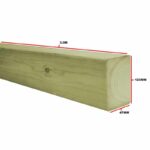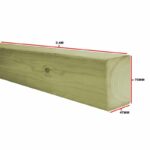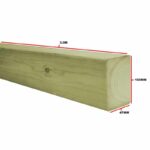
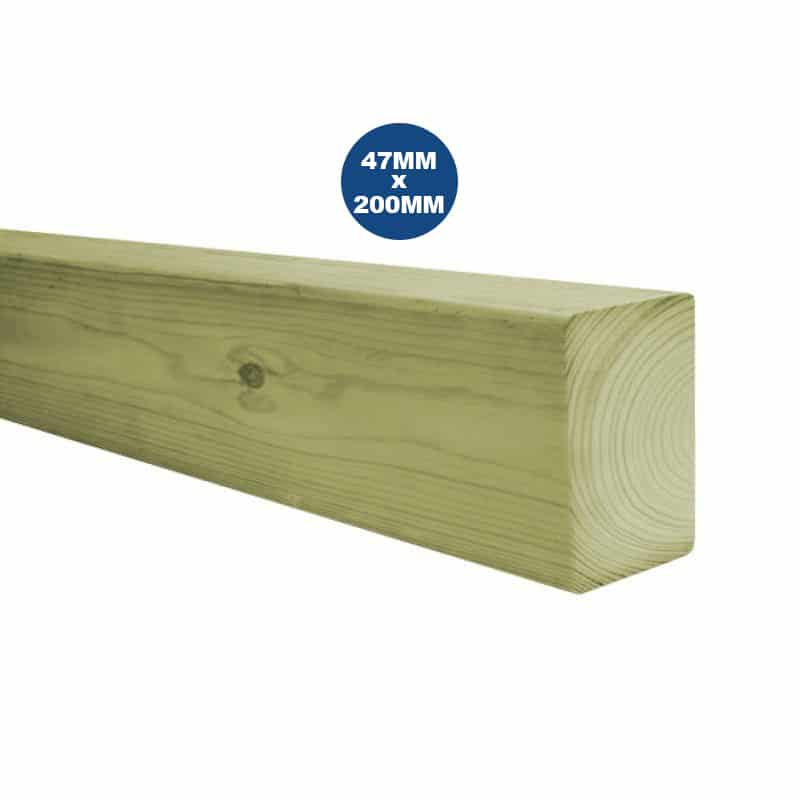

Tanalised Treated Timber 47 x 200mm 3.6m – 8×2 Timber
Tanalised Treated Timber 47 x 200mm 3.6m is a substantial timber section designed for demanding building, landscaping and outdoor construction projects. Commonly known by its traditional imperial size of 8×2 timber, this product combines a deep 200mm nominal profile with a practical 3.6-metre length.
Its generous dimensions make it suitable for projects that require a larger and more robust piece of timber than standard 4×2, 5×2 or 6×2 sections. It can be used for a wide range of applications, from landscaping structures and raised beds to general framework and outdoor construction.
The timber has been pressure treated, often referred to as tanalised, to improve its durability in environments where untreated timber may be vulnerable to moisture, fungal decay and wood-destroying insects.
Product Dimensions
The nominal dimensions of this product are:
- Thickness: 47mm
- Width: 200mm
- Length: 3.6m
- Approximate imperial name: 8×2
- Treatment: Tanalised or pressure treated
The term 8×2 timber is the commonly used imperial trade name for this section. It refers to the approximate dimensions of the timber before machining and finishing. The supplied dimensions are stated metrically as 47 x 200mm.
All timber dimensions should be treated as nominal. The finished measurements may vary slightly because of the machining process, pressure treatment, moisture content and natural expansion or contraction of the wood. Check the timber before beginning any project where precise finished dimensions are essential.
What Is Tanalised Timber?
Tanalised timber is wood that has undergone a controlled pressure-treatment process. During treatment, preservative is driven into the timber to provide improved protection compared with untreated wood.
This treatment helps the timber resist fungal decay and attacks from wood-destroying insects, making it suitable for many outdoor and moisture-prone applications. Pressure treatment can extend the service life of timber when it is installed correctly and used in an appropriate setting.
The treatment does not make the timber completely waterproof or maintenance-free. Good construction practices remain important. Water should be allowed to drain away, standing moisture should be avoided where possible, and suitable protection should be applied to any cut ends or drilled areas.
Common Uses for 8×2 Treated Timber
The substantial 47 x 200mm section makes this timber a practical choice for numerous heavy-duty projects. Typical applications may include:
- Outdoor timber structures
- Garden landscaping projects
- Raised beds and substantial planters
- Retaining features where appropriately designed
- Heavy-duty framework
- Pergolas and garden structures
- Timber edging and borders
- Workshop and agricultural projects
- General construction work
- Replacement or repair projects requiring an 8×2 section
The 3.6m length is useful for medium-to-large projects, offering good coverage while remaining more manageable than longer 4.8m or 6.0m boards. It can also reduce the number of joints required when constructing longer sections of framework.
Suitability will depend on the design, environment, loading and installation method. If the timber will be used in a structural or load-bearing application, confirm that its strength grade and treatment specification are appropriate before installation. Tanalised or pressure treated does not automatically mean that timber is structurally graded.
Suitable for Outdoor Projects
Outdoor timber is frequently exposed to changing weather conditions, moisture and temperature. Pressure-treated timber is therefore a dependable choice for garden and exterior building work where untreated timber may deteriorate more quickly.
The treatment helps improve resistance to biological threats, but careful detailing is still essential. Avoid creating areas where rainwater can collect, provide ventilation where practical and keep the timber clear of persistently wet surfaces unless its treatment classification specifically permits that use.
For projects involving direct ground contact or permanent exposure to high levels of moisture, confirm that the timber has the correct treatment or use class. Requirements may differ depending on the intended application.
Natural Appearance and Variations
Timber is a natural product, so every piece will have its own appearance and characteristics. Variations may include knots, differences in grain pattern, surface marks, resin pockets, minor splits, wane and changes in colour.
Freshly treated timber may have a greenish or pale brown tint, depending on the timber species and treatment used. This colour generally softens as the timber is exposed to daylight and weather. Treatment marks, small incisions or surface residue may also be visible and do not necessarily affect the intended performance of the product.
Colour and appearance can vary between individual pieces and batches. Timber may also expand, contract, twist or develop small surface checks as its moisture content changes. These are normal characteristics of natural wood rather than manufactured defects.
Cutting and Installation
This 3.6m length can be cut using suitable woodworking tools. Measure carefully before cutting and support the timber properly to reduce movement and help achieve a clean, accurate result.
When timber is cut, drilled or notched, the newly exposed areas may not have the same level of preservative protection as the original treated surfaces. Apply an appropriate end-grain or cut-end timber preservative to these exposed areas in accordance with the product manufacturer’s instructions.
Use fixings suitable for treated timber and the intended environment. Exterior-grade galvanised or stainless-steel fixings may be required to reduce the likelihood of premature corrosion or staining. Always select fixings according to the design, exposure level and expected loads.
Wear suitable protective equipment when cutting or drilling timber, including gloves, eye protection and an appropriate dust mask. Work in a ventilated location, wash your hands after handling and dispose of offcuts responsibly. Treated timber should not be burned.
Storage and Maintenance
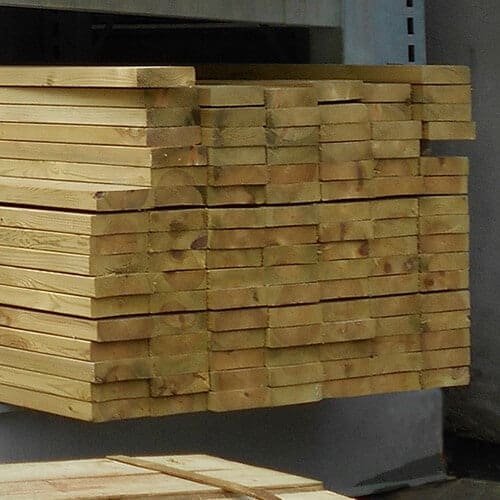
Before installation, store the timber flat, supported evenly and clear of the ground. Keep it protected from prolonged exposure to heavy rain while allowing air to circulate around it. Incorrect storage can encourage bowing, twisting or uneven changes in moisture content.
Once installed, the timber may be left to weather naturally or finished with a compatible exterior wood stain, oil or protective coating. If applying a finish, allow the timber to dry sufficiently and follow the coating manufacturer’s preparation instructions.
Inspect completed outdoor structures periodically. Look for trapped water, loose fixings, damaged coatings or exposed cut surfaces, and carry out maintenance when required.
Key Benefits
- Commonly known as 8×2 treated timber
- Substantial 47 x 200mm nominal section
- Practical 3.6m length
- Pressure treated for improved durability
- Helps resist fungal decay and wood-destroying insects
- Suitable for many landscaping and outdoor construction projects
- Can be cut to suit individual project requirements
- Useful for heavy-duty frameworks and substantial garden structures
Tanalised Treated Timber 47 x 200mm 3.6m provides a strong, practical timber section for a broad range of building and landscaping tasks. Its pressure-treated finish makes it particularly useful for outdoor projects, while the convenient 3.6m length offers a good balance between coverage and handling.
Always check the actual dimensions, appearance, treatment specification and grading before installation. Seek professional advice for structural, retaining or load-bearing work to ensure the timber and overall design are suitable for the intended purpose.