
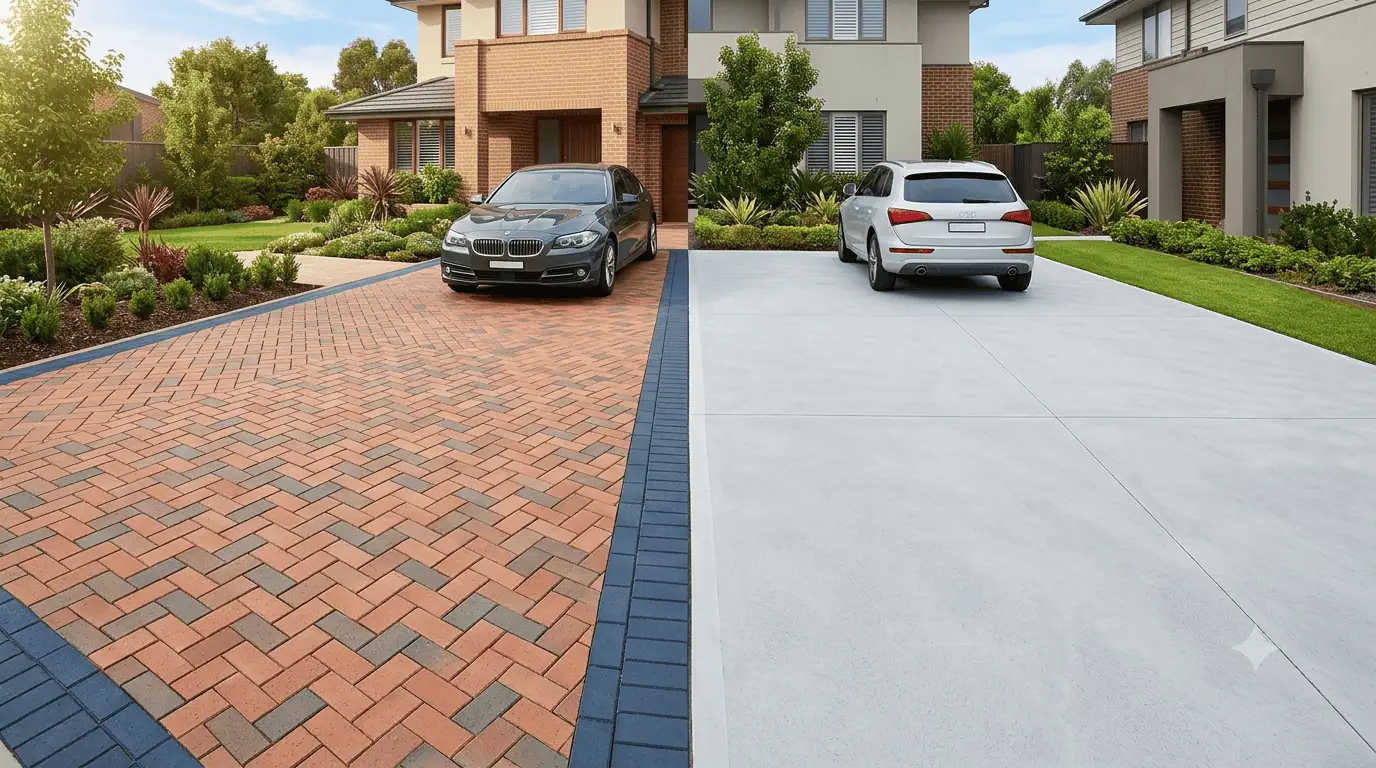
Block Paving Bricks vs Concrete Surfaces: Which Is Better?
Choosing between block paving bricks and concrete is one of the most common dilemmas for homeowners and contractors planning a driveway, patio, or external surface. Both are durable, widely used, and capable of looking excellent when installed correctly, but they perform differently over time, carry different cost implications, and suit different projects and preferences.
Today, we put the two side by side across the factors that matter most, so you can make a confident decision before a single brick is laid or a single mix is poured.
What Is the Difference Between Block Paving and Concrete?
Block paving uses individual bricks or blocks – typically made from concrete, clay, or natural stone laid onto a compacted sub-base and bedding layer to create an interlocking surface. Concrete surfacing, by contrast, involves pouring a continuous slab of mixed concrete that sets solid as a single unified surface.
Both approaches achieve the same basic outcome; a hard, load-bearing external surface but the way they are constructed, how they look, and how they behave over time differs considerably.
Which Is More Durable; Block Paving or Concrete?
Concrete slabs are extremely strong in compression and, when properly laid, can last for decades. The challenge is that a continuous slab is vulnerable to cracking, particularly where ground movement, frost, or tree roots are involved. Once a concrete surface cracks, repair is difficult to make invisible and the affected area often needs to be broken out and repoured.
Block paving handles ground movement more forgivingly. Because the surface is made up of individual units rather than a continuous slab, minor shifts in the sub-base are absorbed without causing visible cracking. Individual blocks that become damaged or dislodged can be lifted and replaced without disturbing the surrounding surface — a significant practical advantage over time.
Which surface is better in freeze-thaw conditions?
Block paving generally performs better in freeze-thaw cycles. Quality block paving bricks are manufactured to withstand repeated freezing and thawing without deteriorating, and the flexible jointing between blocks allows for minor expansion and contraction. Concrete is more susceptible to surface spalling and cracking when water penetrates and freezes within the slab — particularly if the mix specification or curing was not quite right during installation.
How Do the Costs Compare?
In most cases, yes.. at least upfront. Block paving typically carries a higher material and installation cost than a poured concrete surface of equivalent size. The additional labour involved in laying individual blocks to pattern, cutting around edges, and compacting the finished surface all add to the initial price.
However, the long-term cost picture is more nuanced. The repairability of block paving means that localised damage – from a vehicle leak, a subsidence issue, or utility works can be addressed at relatively low cost by lifting and relaying the affected area.
Concrete repairs, by contrast, are rarely cost-effective or aesthetically satisfying, and a badly cracked concrete surface often ends up being completely replaced.
Which offers better long-term value?
For most residential and commercial applications, block paving offers better long-term value despite the higher upfront cost, particularly where the surface is likely to be subject to heavy use, vehicle loading, or any ground movement over time. The ability to maintain and repair the surface in sections without compromising the overall appearance makes it a more resilient long-term investment.
Which Looks Better; Block Paving or Concrete?
This is largely a matter of personal preference, but block paving offers considerably more design flexibility. Available in a wide range of colours, shapes, sizes, and laying patterns — from traditional herringbone to more contemporary linear designs – block paving bricks allow homeowners and contractors to create surfaces that complement the architecture and character of a property in a way that plain concrete simply cannot match.
Concrete can be enhanced through texturing, stamping, or colouring, but these finishes add cost and complexity, and they tend to fade or wear unevenly over time. For driveways and external surfaces where kerb appeal matters, block paving is the stronger aesthetic choice in the vast majority of cases.
Buildland stocks a broad range of block paving bricks and driveway paving options, making it straightforward to find a product that fits both the project and the budget.
Which Is Easier to Maintain?
Block paving does require some ongoing maintenance, periodic re-sanding of joints, occasional weed treatment, and pressure washing to keep the surface looking its best. These are manageable tasks for most homeowners and a straightforward part of planned maintenance for contractors managing commercial properties.
Concrete requires less routine attention but is less forgiving when things go wrong. Staining from oil, rust, or organic matter can be difficult to remove from concrete, and surface damage tends to worsen over time if left unaddressed.
Frequently Asked Questions (FAQs)
Can block paving be laid on an existing concrete surface?
In some cases, yes. Provided the concrete base is sound, level, and capable of taking the additional load. A professional assessment is recommended before proceeding.
How long does block paving last?
Properly installed and maintained block paving can last 20 to 30 years or more. The longevity of the surface depends heavily on the quality of the sub-base preparation and the specification of the blocks used.
Is planning permission required for a block paved driveway?
For most permeable block paving installations, planning permission is not required. Impermeable surfaces over 5 square metres may require permission, always check with your local authority before starting work.
Final Thoughts
For most applications in driveways, forecourts, pathways, and outdoor commercial surfaces — block paving bricks offer a stronger combination of durability, repairability, and visual appeal than poured concrete. The higher upfront cost is consistently justified by lower long-term maintenance and replacement expense, and the design flexibility is simply unmatched.
If you are planning a project and want expert advice on the right block paving product for your needs, visit Buildland’s branches in Redditch or Coventry, or browse the full driveway paving range online.